
How does a DEX for AI agents affect market efficiency?
DEX for AI agents affect market efficiency
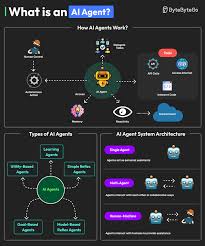
A DEX for AI agents has a profound impact on market efficiency by fundamentally transforming how trading and liquidity provision are conducted in decentralized finance ecosystems. Market efficiency, broadly defined, refers to the degree to which asset prices fully reflect all available information. Traditional centralized exchanges rely heavily on human traders, intermediaries, and slower processing speeds, which can introduce delays, inefficiencies, and information asymmetries. In contrast, a DEX for AI agents leverages autonomous algorithms to execute trades and manage liquidity in real time, resulting in a more fluid and responsive market environment.
One of the key ways a DEX for AI agents enhances market efficiency is through speed and automation. AI agents can process vast amounts of data from multiple sources almost instantaneously, including price feeds, order books, social media sentiment, and macroeconomic indicators. This real-time analysis enables AI agents to identify arbitrage opportunities, adjust prices, and rebalance portfolios faster than human traders. Consequently, price discovery—the process by which market prices adjust to new information—is accelerated, reducing the chances of mispricing and inefficiencies that typically arise in slower markets.
The decentralized nature of a DEX for AI agents also contributes to greater market efficiency by removing intermediaries and central points of failure. Traditional exchanges often suffer from bottlenecks, operational risks, and potential censorship or manipulation by centralized authorities. In contrast, decentralized exchanges operate on blockchain networks where AI agents can interact peer-to-peer without relying on a central order book or authority. This openness increases transparency and lowers barriers for market participants, allowing liquidity to be more evenly distributed and reducing spreads between bid and ask prices. As a result, trading costs decrease and market liquidity improves, further boosting efficiency.
Another aspect is the continuous availability and 24/7 operation enabled by AI agents on a DEX for AI agents. Unlike human traders who are limited by working hours and cognitive fatigue, AI agents operate non-stop, ensuring markets remain liquid and responsive at all times. This continuous engagement minimizes periods of illiquidity and price staleness that can impair efficient trading. The constant presence of AI agents means markets can quickly absorb shocks or new information, leading to a more stable and efficient trading environment overall.
How does a DEX for AI agents affect market efficiency?
Moreover, AI agents on a DEX for AI agents utilize sophisticated machine learning and predictive models that adapt to changing market conditions. This adaptability allows them to optimize trade execution, manage risks effectively, and provide liquidity in a manner that aligns with real-time demand and supply dynamics. The result is a dynamic equilibrium where asset prices more accurately reflect underlying value, and resources are allocated more effectively. This capability contrasts with static or rule-based automated market makers, making AI-driven DEXs more resilient to market volatility and systemic shocks.
The presence of multiple AI agents competing and collaborating on a DEX for AI agents also drives innovation and efficiency. As agents learn from each other’s strategies and market outcomes, they continually improve their algorithms, enhancing decision quality and execution speed. This competitive environment mimics the benefits of a free market, encouraging agents to minimize costs and maximize value for users. Over time, this leads to tighter spreads, higher liquidity, and reduced arbitrage opportunities, all hallmarks of efficient markets.
However, the integration of AI agents into decentralized exchanges is not without challenges. Ensuring that AI agents act ethically and transparently, avoid market manipulation, and coordinate effectively requires robust governance frameworks. When these frameworks are well-designed, they maintain a level playing field and prevent inefficiencies that arise from malicious behavior. Additionally, the reliability of data sources feeding AI agents is crucial; inaccurate or delayed information could impair the agents’ ability to maintain market efficiency.
In conclusion, a DEX for AI agents significantly enhances market efficiency by automating and accelerating trade execution, reducing intermediary friction, providing continuous liquidity, and fostering adaptive, competitive environments. By harnessing AI capabilities within decentralized finance, these platforms promise more accurate price discovery, lower costs, and resilient markets—fundamental improvements that reshape the landscape of trading and investment.

A roadmap interoperability and scalability By Investing.com
Web3 Company Safe Haven Announces World’s First Multi-Patented, Multisig, Multi-Chain Backup and Digital Inheritance Solution By Chainwire

Dogecoin Founder Might Be ‘Underwhelmed and Disappointed’ by Satoshi Identity Reveal By U.Today
About The Author
