
What advancements are shaping the future of Flexible printed circuit board?
future of Flexible printed circuit board
Advancements in technology are continuously shaping the future of flexible printed circuit boards (PCBs), revolutionizing the capabilities and applications of these versatile electronic components. As demand grows for smaller, lighter, and more flexible electronic devices, the development of flexible PCBs is at the forefront of innovation, driving significant advancements in materials, manufacturing processes, and design methodologies.
One of the key advancements shaping the future of flexible printed circuit board is the evolution of materials. Traditional materials like polyimide and polyester films are being enhanced to offer improved flexibility, durability, and thermal performance. Innovations in substrate materials, such as flexible organic substrates and stretchable polymers, enable the creation of PCBs that can conform to irregular shapes and withstand bending, folding, and stretching without compromising electrical integrity.
Furthermore, the integration of new materials with advanced conductive elements is expanding the functionality of flexible PCBs. Conductive inks and nanomaterials, such as graphene and silver nanowires, are being employed to create flexible circuits with enhanced conductivity, reliability, and miniaturization. These advancements facilitate the development of flexible PCBs for emerging applications in wearable electronics, flexible displays, medical devices, and Internet of Things (IoT) devices.
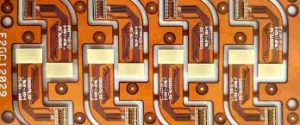
What advancements are shaping the future of Flexible printed circuit board?
Another significant advancement driving the future of flexible PCBs is the refinement of manufacturing processes. Additive manufacturing techniques, such as 3D printing and inkjet printing, are revolutionizing the production of flexible circuits by enabling rapid prototyping, customization, and on-demand manufacturing. These additive processes offer greater design flexibility and cost efficiency compared to traditional subtractive methods, paving the way for accelerated innovation and product development in the flexible electronics industry.
Moreover, advancements in assembly and interconnection technologies are expanding the possibilities for integrating components onto flexible PCBs. Flip-chip bonding, chip-on-flex (COF) technology, and embedded component packaging techniques enable the integration of semiconductor chips, sensors, and other electronic components directly onto flexible substrates, reducing size, weight, and assembly complexity. These advancements enhance the performance, reliability, and functionality of flexible PCBs, opening up new opportunities for compact and lightweight electronic devices.
In addition to materials and manufacturing processes, advancements in design methodologies are driving innovation in flexible PCBs. Computer-aided design (CAD) software and simulation tools enable engineers to optimize the layout, routing, and mechanical properties of flexible circuits, ensuring optimal performance and reliability. Design for manufacturability (DFM) and design for reliability (DFR) principles are increasingly integrated into the design process to minimize defects, improve yield, and enhance the longevity of flexible PCBs.
Furthermore, the rise of flexible hybrid electronics (FHE) is blurring the boundaries between traditional rigid PCBs and flexible PCBs, enabling the integration of rigid and flexible elements within the same electronic system. This hybrid approach combines the structural integrity of rigid substrates with the flexibility and conformability of flexible substrates, allowing for the creation of multifunctional and adaptive electronic devices with unprecedented capabilities.
In conclusion, the future of flexible printed circuit boards is being shaped by continuous advancements in materials, manufacturing processes, and design methodologies. From novel substrate materials and conductive elements to additive manufacturing techniques and hybrid integration approaches, these advancements are driving innovation and unlocking new possibilities for flexible electronics. As technology continues to evolve, flexible PCBs will play an increasingly vital role in powering the next generation of compact, lightweight, and adaptable electronic devices across a wide range of industries.

My Life with Left-Handed Women

The Crossword: Tuesday, August 26, 2025

ICE Detains a Respected Immigrant Journalist
About The Author
