
What Applications Are Ideal For Rigid Flex PCBs?
Rigid Flex PCBs
Rigid flex circuit boards combine technology from rigid and flexible circuits to offer the best of both worlds. These multilayered devices contain flexible layers buried within rigid boards that connect to one another, and they have the ability to fold where needed during installation. This allows them to fit into tight spaces and make room for additional components, making them an ideal solution when space is limited or a complex design exists.
Rigid-flex PCBs also allow for lower assembly costs. The elimination of connectors and cables reduces production time, simplifies the assembly process, and reduces the amount of materials required for a finished product. In addition, the use of rigid flex PCBs can improve reliability by eliminating possible points of failure in a device’s connections.
A rigid flex pcb is designed to handle high-component density applications. These types of circuit boards are used to build high-tech gadgets and appliances, such as laptops, desktop computers, audio keyboards, solid-state drives, flat-screen TVs and monitors, children’s toys, cameras, and wearable technology. Rigid-flex PCBs are also commonly found in medical equipment, military missile guidance systems, and automotive robotics.
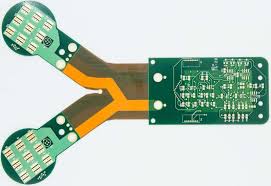
What Applications Are Ideal For Rigid Flex PCBs?
These circuits have the ability to withstand more stress and environmental conditions than traditional rigid PCBs. They are capable of withstanding movement, rapid pressure, and extreme temperatures. Additionally, they can tolerate vibration, radiation exposure, and chemicals. Unlike other PCBs, which can become warped or damaged after repeated bending, rigid-flex circuit boards can endure these extreme conditions without suffering damage.
Rigid flex circuits are an excellent choice for high-speed and high-frequency applications, since they offer improved signal integrity. This is a result of reduced impedance discontinuities, resulting in better signal transmission. They are also an excellent choice for aerospace and telecommunications equipment because of their lightweight design and increased flexibility.
When deciding on a rigid flex circuit board, it’s important to consider the material and design requirements of your application. It’s essential to work with a designer to choose the right type of PCB for your application. The design process is a critical step in ensuring that your final product is successful. Choosing the wrong type of PCB can have an adverse effect on the functionality and performance of your electronic device.
Rigid flex PCBs are an ideal option for high-density assemblies that don’t have enough surface area to accommodate the number of cables and connectors necessary for proper function. In these cases, replacing five or more rigid boards with rigid flex PCBs can economize space and increase spatial efficiency. In addition, these circuits eliminate the need for multiple wire harnesses in a device’s enclosure, which can further decrease the overall size of a final product. Rigid flex circuits can be made from various materials, including polyimide and rolled annealed copper. However, a rigid-flex circuit board should always be UL 94V-0 certified to ensure that it will meet flammability and shock safety standards. This will speed up the approval process, which can save a manufacturer time and money.

Restaurant Review: Borgo Is Worth the Trip to Manhattan

What a Right-Wing Militia Sounds Like, from the Inside

Daily Cartoon: Monday, May 5th
About The Author
