
What role does adhesive play in a flexible printed circuit?
adhesive play in a flexible printed circuit
Adhesive plays a crucial role in the construction and functionality of flexible printed circuits (FPCs), serving as a binding agent that ensures the integrity and performance of these complex electronic components. The use of adhesives in FPCs is essential for maintaining the structural stability of the circuit while allowing it to maintain its unique properties, such as flexibility and lightweight design. Understanding the various functions of adhesive in FPCs helps to appreciate its importance in the manufacturing process and the overall reliability of the final product.
One of the primary functions of adhesive in flexible printed circuits is to bond different layers of materials together. FPCs typically consist of multiple layers, including a flexible substrate, conductive traces, and sometimes additional insulating layers. Adhesives ensure that these layers remain securely attached throughout the lifecycle of the circuit. This bonding is particularly critical in applications where the circuit may be subjected to mechanical stresses, such as bending, twisting, or stretching. A strong adhesive bond helps to prevent delamination, which can lead to circuit failure and compromised electrical performance.
In addition to providing structural integrity, adhesives also play a significant role in enhancing the electrical performance of flexible printed circuit. The choice of adhesive can influence the overall dielectric properties of the circuit, which is crucial for maintaining signal integrity. High-quality adhesives with favorable dielectric constants can minimize signal loss and crosstalk, ensuring that electrical signals are transmitted efficiently across the circuit. As FPCs are often used in high-frequency applications, selecting the right adhesive is essential to support optimal performance.
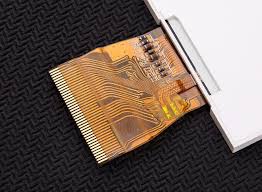
What role does adhesive play in a flexible printed circuit?
Moreover, the adhesive used in flexible printed circuits must be compatible with the materials involved in the circuit assembly. This compatibility is critical not only for ensuring a strong bond but also for preventing chemical interactions that could degrade the performance of the circuit. Manufacturers must carefully select adhesives that are specifically formulated for use with the types of substrates and conductive materials in the FPC. Incompatible adhesives can lead to issues such as poor adhesion, chemical degradation, and even failure of the circuit under stress.
Another important role of adhesive in flexible printed circuits is its ability to provide environmental protection. Many adhesives offer moisture resistance and can help shield the circuit from contaminants, chemicals, and physical damage. This protective function is especially crucial in wearable devices and other applications where the circuit may be exposed to sweat, humidity, or harsh environmental conditions. By encapsulating the conductive traces and sensitive components, adhesives contribute to the overall durability and longevity of the FPC.
The application of adhesive in flexible printed circuits also involves precision and attention to detail. The adhesive must be applied uniformly to avoid issues such as uneven bonding or air pockets, which can compromise the circuit’s performance. Advanced techniques, such as screen printing or lamination, are often employed to achieve precise application of adhesive in FPC manufacturing. These methods ensure that the adhesive layer is appropriately thicknessed, providing the necessary bond strength without adding excessive weight or bulk to the circuit.
Furthermore, the curing process of adhesives is an essential aspect of FPC manufacturing. Many adhesives require specific conditions, such as heat or ultraviolet light, to cure properly and achieve optimal bonding strength. Manufacturers must carefully monitor and control these conditions to ensure that the adhesive reaches its full potential. Inadequate curing can lead to weak bonds, which may fail under mechanical stress or thermal cycling.

Richard Brody’s New Directors/New Films Picks

The Rise And Fall of DOGE

The Best-Selling Novelist Kaveh Akbar Leans Into His Poetic Roots
About The Author
